What the Software Did on Its Own: A Timekeeping Self-Audit for Small Employers
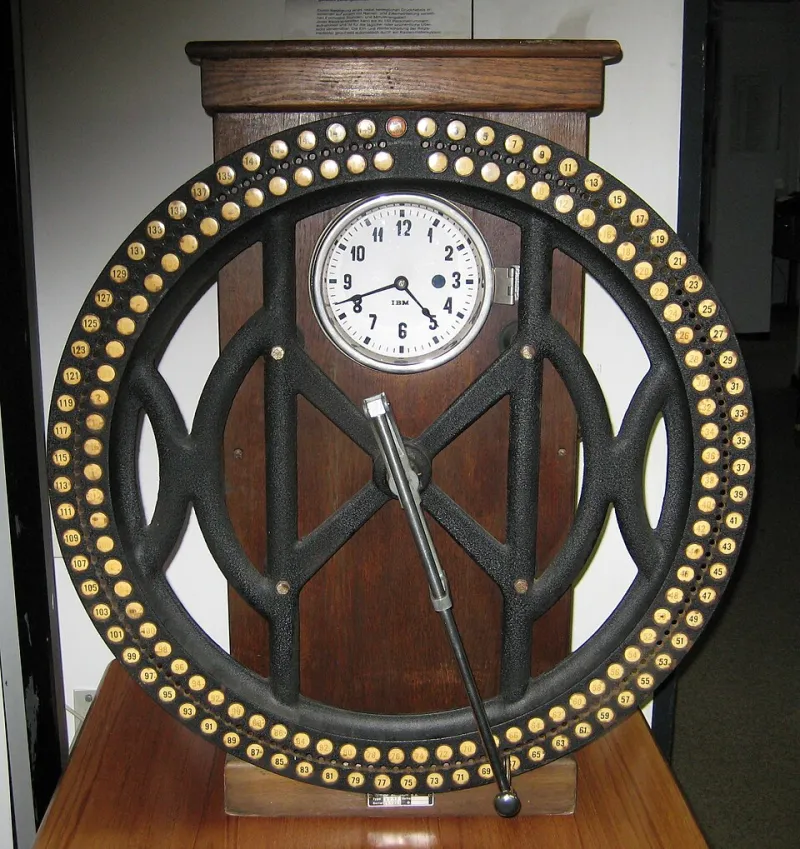
Photo: JuergenG, CC BY-SA 3.0, via Wikimedia Commons
Few small employers sit down and decide how time will be measured. The rules arrive by inheritance: a setting chosen during implementation, a spreadsheet a former office manager maintained, a rounding convention copied from an industry peer. By the time anyone asks why the system works that way, the answer is usually that it always has.
That inheritance is where wage-and-hour exposure tends to accumulate. Not in dramatic policy decisions, but in the ordinary mechanics of converting a punch into a paycheck. The following review is designed for an employer without a dedicated payroll compliance function—someone who can set aside a morning, pull a handful of reports, and ask harder questions of settings that have never been questioned.
Three Practices That Look Administrative and Are Not
Rounding. Federal rules permit employers to round punch times, provided the rounding does not consistently favor the employer over time (29 C.F.R. § 785.48(b)). Rounding to the nearest quarter hour is generally acceptable when it is neutral in application. It becomes a problem when the practice, examined across many punches, systematically shaves minutes from the employee's side of the ledger. A neutral rule applied to a workforce with predictable arrival patterns is rarely neutral in result.
Automatic meal deductions. A system that subtracts thirty or sixty minutes for a meal period assumes the break was taken. That assumption fails the moment an employee eats at the desk, answers a call mid-meal, or is pulled onto the floor during a rush. The deduction is an administrative convenience; the legal obligation is to pay for time actually worked.
Minute-shaving for late arrivals. Rounding a 8:07 arrival to 8:15 is defensible if the employee genuinely began work later and the practice is consistent. It is not defensible when the same system rounds a 4:52 departure down to 4:45. Asymmetry is the tell. So is a supervisor who manually adjusts punches only in one direction.
Why Small Errors Travel Farther Than They Appear
A four-minute underpayment is trivial in isolation and consequential in aggregate. Multiply it by the number of shifts, the number of employees, and the number of pay periods in a state's lookback window. Several states allow recovery stretching back three or four years, and federal law permits a two-year window that extends to three when a violation is found to be willful. Liquidated damages, where awarded, can double the figure. The arithmetic is what turns a convenience into a claim.
The recordkeeping obligation compounds the risk. Employers are expected to maintain accurate records of hours worked, and a payroll system that rounds is producing records that no longer match the underlying punches. If the two are never reconciled, the employer loses the ability to demonstrate that the practice was fair.
A Review Sequence for a Lean Team
Step one: read the settings, not the handbook. Policies describe intent; configurations determine conduct. Open the timekeeping platform and document every rounding rule, break deduction, grace period, and automatic adjustment currently active. Note when each was last changed and by whom.
Step two: compare paid time to actual punches. Pull the raw punch detail for a sample of at least twenty shifts across several employees and pay periods. Recalculate paid hours from the punches alone and compare the result to what the system paid. Record every variance and its direction. Patterns matter more than individual entries.
Step three: test the break deduction against reality. For the same sample, determine whether meal periods were genuinely taken and uninterrupted. Where schedules, coverage records, or manager confirmation cannot establish an uninterrupted break, treat the deduction as unsupported.
Step four: check the state overlay. Rounding, meal period, and reporting-time requirements vary considerably by state, and several states impose rules stricter than federal law. Confirm which state's rules govern each employee's work—remote and multi-state staff make this less obvious than it once was.
Step five: review the manual edits. Every timekeeping system has an adjustment log. Look for supervisors who routinely move punches, and ask what business reason each edit reflects. A pattern of one-directional adjustments is the clearest signal in the entire review.
Step six: quantify. Convert the variances into dollars by employee and pay period. Resist the temptation to net gains against losses; a rounded-up arrival does not offset a rounded-down departure in most state frameworks.
Step seven: correct and document. Issue corrective payments through payroll as supplemental wages, with a written memorandum identifying the period reviewed, the methodology, the amount, and the change made going forward. Keep the underlying calculations. A modest, documented correction made voluntarily is a very different posture from a correction extracted after a complaint.
One Adjacent Risk Worth Naming
For salaried exempt employees, improper deductions carry a separate consequence: certain deductions from a predetermined salary can undermine the exemption itself. Timekeeping reviews should therefore include a check that no exempt employee's pay is being reduced for partial-day absences or docking that the salary-basis test does not permit.
Making the Review Routine
An annual full review prevents drift, but drift happens faster than annually. A short quarterly sample—twenty punches, one break test, one adjustment log scan—takes under an hour and catches the settings that changed without anyone deciding they should. Add a review trigger whenever the payroll platform updates, a new state enters the workforce, or the person responsible for payroll changes hands.
The most useful outcome of this exercise is not a back-pay calculation. It is the discovery that no one in the organization currently owns the settings at all. Assigning that ownership, in writing, is the cheapest correction available.